Home

Visit Rome following 8 XVIIIth century itineraries XVIIIth century Rome in the 10 Books of Giuseppe Vasi - Le Magnificenze di Roma Antica e Moderna The Grand View of Rome by G. Vasi The Environs of Rome: Frascati, Tivoli, Albano and other small towns near Rome A 1781 map of Rome by G. Vasi An 1852 map of Rome by P. Letarouilly Rome seen by a 1905 armchair traveller in the paintings by Alberto Pisa The 14 historical districts of Rome An abridged history of Rome How to spend a peaceful day in Rome Baroque sculptors and their works The coats of arms of the popes in the monuments of Rome Pages on a specific pope Pages complementing the itineraries and the views by Giuseppe Vasi Walks in the Roman countryside and in other towns of Latium following Ferdinand Gregorovius A Directory of links to the Churches of Rome A Directory of links to the Palaces and Villas of Rome A Directory of links to the Other Monuments of Rome A Directory of Baroque Architects with links to their works A Directory of links to Monuments of Ancient Rome A Directory of links to Monuments of Medieval Rome A Directory of links to Monuments of Renaissance A Directory of links to Monuments of the Late Renaissance A list of the most noteworthy Roman Families Directories of fountains, obelisks, museums, etc. Books and guides used for developing this web site An illustrated Glossary of Art Terms Venice and the Levant Roman recollections in Florence A list of Italian towns shown in this web site Venetian Fortresses in Greece Vienna seen by an Italian XVIIIth century traveller A list of foreign towns shown in this web site
What's New!

Detailed Sitemap

All images © by Roberto Piperno, owner of the domain. Write to romapip@quipo.it. Text edited by Rosamie Moore.

To the Italian visitors of my web site

RENAISSANCE ROME
in the footsteps of an XVIIIth century traveller
 

Renaissance Rome

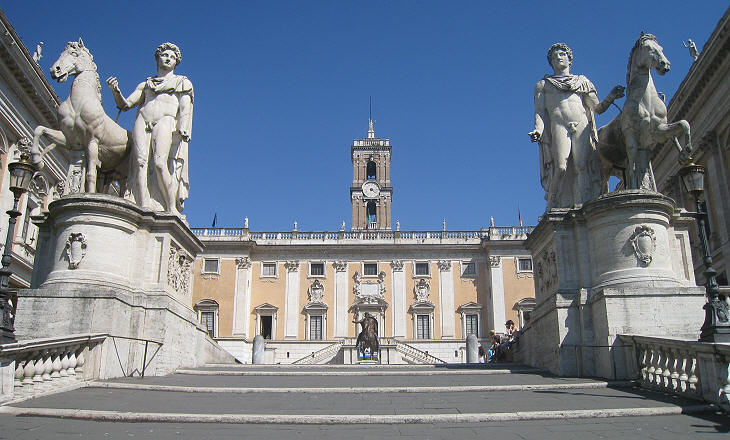
(Steps to Capitol Hill
background of this page: detail of S. Maria in Dominica )
A selection of plates by Giuseppe Vasi showing Renaissance Rome (until 1555).
Castello della Magliana (Plate 12)
Porta Settimiana (Plate 14)
Porta S. Spirito (Plate 15)
S. Maria del Popolo (Plate 21)
Palazzo di Lorenzo Manilio (Plate 29)
Piazza S. Marco (Plate 39)
S. Pietro in Vincoli (Plate 45)
S. Maria del Buon Consiglio (Plate 47)
S. Maria in Dominica (Plate 52)
Palazzo S. Marco (Plate 65)
Palazzo Sacchetti sulla Strada Giulia e S. Eligio degli Orefici (Plate 71)
Palazzo Salviati alla Lungara (Plate 72)
Palazzo Farnese (Plate 73)
Palazzo della Cancelleria Apostolica (Plate 74)
Palazzo Massimi delle Colonne (Plate 76)
Palazzi di Campidoglio (Plate 80)
Tempio di S. Andrea (Plate 84)
Giardino Farnese (Plate 88)
Ponte Sisto (Plate 89)
S. Pietro in Montorio (Plate 90bis)
S. Maria in Porta Paradisi (Plate 107)
Palazzo alla Maschera d'Oro (Plate 108)
Palazzo Alberini and Palazzo Crivelli (Plate 109)
Palazzo Ricci (Plate 111)
Palazzo Cenci (Plate 113)
Basilica di S. Marco (Plate 115)
Palazzo Giraud (Plate 120)
S. Maria dell'Anima (Plate 121)
S. Onofrio (Plate 123bis)
Palazzo Spada (Plate 131)
Palazzo Valle e Palazzo Vidoni (Plate 134)
Palazzo Santacroce e Casa di Alessandro Gancia (Plate 136)
Palazzo di Sora (Plate 137)
Collegio Capranica (Plate 138)
S. Agostino (Plate 175)
Casa del Burcardo (Plate 179)
Giardino e Casino Pontificio di Belevedere (Plate 181)
Villa Madama fuori Porta Angelica (Plate 184)
Casino di Papa Giulio III (Plate 186)
Villa e Casino Medici (Plate 187)
Orti Farnesiani (Plate 197)
Villa Lante (Plate 198bis)
S. Pancrazio (Plate 199)

See also the following pages of the abridged history of Rome:
I - Rome's Early Renaissance
II - Splendour and Crisis